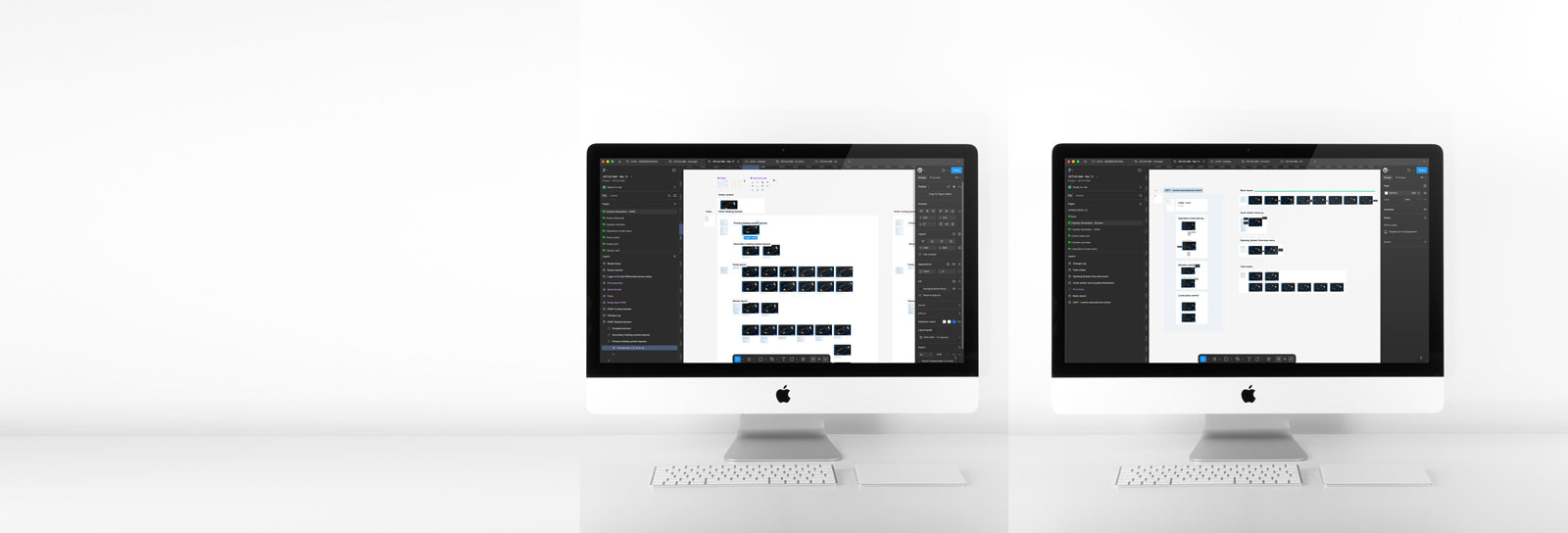
Strategic Problem
Industrial operators were forced to navigate fragmented data streams to monitor HVAC and Booster performance, leading to high cognitive load and delayed responses to system irregularities. The lack of a unified source of truth for complex pump telemetry meant that critical warnings could be overlooked within disparate sub-menus.
Systemic Solution
I led the strategic effort to unify these industrial services into a high-performance IoT ecosystem. I designed sophisticated data models and table systems to ensure that high-density mechanical data—such as pressure, flow rates, and energy consumption—remained actionable and clear for professional engineers.
Methodology
Utilizing Information Ecology principles, I mapped the critical usage patterns of onsite operators versus global facility managers to prioritize data delivery. I conducted deep-dive research into hardware integration capabilities to ensure the UI could reflect real-time chip-level data without latency or visual clutter.
Design Strategy
I implemented a Layered Information Architecture where high-level system health is visible at a glance, while drill-down interactions allow for granular sensor-level analysis. I engineered a specialized status-indicator system (Alert, Warning, Optimal) to guide operator attention specifically toward "Exceptions," significantly reducing the time-to-remediation for system faults.
Design Ops
I established a robust UI framework that standardized navigation and branding across the entire Grundfos HVAC suite. This modularity ensures that new hardware modules or additional pump types can be integrated into the dashboard without disrupting the unified user experience.
Command & Control Features:
I designed interactive Pump Status Cards that provide an immediate summary of pump health, energy efficiency, and flow rates. These are integrated with a global alert system that programmatically surfaces critical failures to the top of the operator’s view, ensuring 100% visibility for high-priority tasks.
Stakeholder Management
I fostered critical alignment between Technical Architects, Hardware Engineers, and Product Owners to ensure the design was optimized for industrial environments. I acted as the bridge between technical feasibility and user experience, ensuring that the complex monitoring requirements of the Booster systems were fully met within the interface logic.
Reflection
Working on a large-scale industrial project taught me how to manage the unique constraints of real-time machine data. I learned that unification in an industrial context requires a delicate balance between high-density data and immediate, life-critical legibility.